Introduction
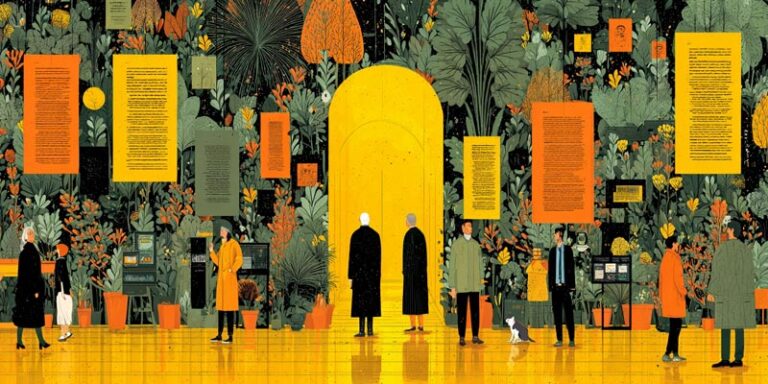
Every prompt engineer has a folder they don’t talk about — the one filled with AI disasters. Gibberish essays, nightmarish images, or polite-but-pointless emails. Welcome to the Bad Prompt Museum, a place where we put those fails on display not to shame, but to laugh, learn, and improve. Mistakes aren’t the end of the story; they’re stepping stones toward better prompting. In fact, “AI hallucinations” became one of the most discussed topics in tech media in 2023–2024, underscoring how common funny or faulty outputs have become Nature. Let’s tour the exhibits.
Exhibit A: The Infinite Loop Response
Prompt: “Explain recursion simply.”
Output: “Recursion is when recursion is when recursion is when recursion…”
Why it happens: The model latched onto the word itself without grounding in context.
Fix: Add an analogy. For example: “Explain recursion to a 10-year-old, using the example of mirrors facing each other.”
Result? A much clearer, kid-friendly explanation about mirrors reflecting mirrors.
Exhibit B: The Cursed Image
Prompt: “Generate an image of a cute dog riding a skateboard.”
Output: A horrifying six-legged creature with two heads and… is that fur or lava?
Why it happens: Early image models (and sometimes modern ones) struggle with anatomy and multi-part prompts.
Fix: Break the prompt down: “A golden retriever puppy on a red skateboard, rolling on a city sidewalk. One head, four legs.” Adding constraints brings sanity back to the art.
Exhibit C: The Overly Literal Email
Prompt: “Write a warm follow-up email.”
Output: “This email is warm. Warm regards. Warmly.”
Why it happens: The model interpreted “warm” literally instead of tonally.
Fix: Be explicit: “Write a friendly and approachable follow-up email to a client, using natural conversational tone.” Clarity beats single adjectives.
Exhibit D: The Essay That Never Ends
Prompt: “Tell me everything about World War II.”
Output: 20 screens later, the AI is still going, and you’re regretting your choices.
Why it happens: Vague scope invites infinite expansion.
Fix: Define boundaries: “Summarize World War II in 5 key events, explained in 2–3 sentences each.” Now the AI produces something digestible.
Exhibit E: The Lost-in-Translation Joke
Prompt: “Tell me a pun in Spanish.”
Output: A phrase that wasn’t a pun — just a normal sentence about bread.
Why it happens: Humor is cultural and highly contextual. AI models often miss subtle linguistic play.
Fix: Add instructions: “Give me a Spanish pun, and explain in English why it’s funny.” The explanation ensures the humor translates.
What These Fails Teach Us
- Prompts need clarity: Vague or single-word inputs invite chaos.
- Break big tasks into small steps: AI struggles with multi-part instructions without scaffolding.
- Constraints are creativity’s friend: Guardrails help outputs stay on track.
- Humor and nuance require extra care: Especially in cross-cultural or subjective areas.
Case Study: From Fail to Fix
A marketing team once asked AI for “funny product slogans.” The results were unhinged: “Buy our coffee, it will haunt your dreams.” Entertaining, but unusable. After rephrasing to: “Write 5 witty but professional slogans for a coffee brand aimed at young professionals,” they got gems like: “Fuel your hustle, one cup at a time.” The fail wasn’t wasted — it showed the importance of constraints and tone guidance. This aligns with research showing that humor prompts in AI need careful framing to land effectively Fast Company.
Why Keep a Bad Prompt Museum?
Because failure has branding value. Sharing your funniest AI fails makes your team more approachable and sparks conversations online. It’s also an internal teaching tool — a lighthearted archive of what not to do. Some companies even make Slack channels dedicated to “AI bloopers,” which double as both stress relief and knowledge-sharing spaces.
Conclusion
The Bad Prompt Museum reminds us that AI isn’t magic — it’s pattern prediction. When the patterns break, the results can be hilariously wrong. But every fail contains a fix. Treat mistakes as exhibits, study why they happen, and refine your inputs. Over time, your museum becomes less about cringe and more about progress. And let’s be honest — who doesn’t love a cursed skateboard dog now and then?