Introduction
What if your AI outputs weren’t just paragraphs of text, but panels of a comic? Comics are the perfect medium for blending narrative and visuals — and prompts can be the script that brings them to life. Prompt Comics take ordinary inputs and transform them into illustrated stories, merging creativity, humor, and branding in ways blogs and reports never could. This post explores how to experiment with AI-generated comics, why they work, and how to use them strategically for storytelling and brand identity.
Why Comics and Prompts Belong Together
Comics combine two powerful elements: visual impact and sequential storytelling. Prompts, meanwhile, are instructions that generate either text or images. Put them together and you can:
- Make abstract concepts relatable: Explaining “machine learning” as a superhero origin story sticks more than a slide deck.
- Enhance memory: People remember visuals far longer than plain text Nielsen Norman Group.
- Brand with personality: A lighthearted comic voice humanizes complex tech.
Case Study: The Startup Comic Pitch
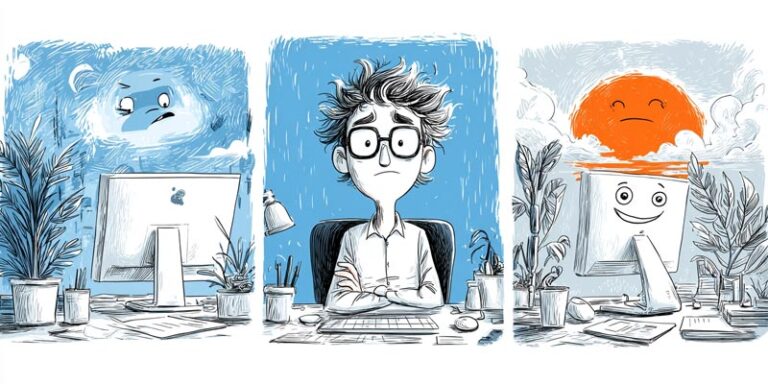
A small AI startup once struggled to explain its product to non-technical investors. Instead of another bullet-point presentation, the founder fed prompts into Midjourney and ChatGPT: “Create a comic strip showing a frustrated office worker, then an AI assistant solving their problem in three panels.” The result was a playful story — clear, fun, and memorable. Investors left the meeting saying, “We get it now.” The comic didn’t just entertain; it clarified the business model. According to an Adobe report (2024), visual storytelling can increase engagement by up to 80% in brand communication.
Framework: How to Build a Prompt Comic
Here’s a step-by-step workflow for turning prompts into illustrated narratives:
1. Script the Panels
Use text prompts to generate short dialogue or narration. For example: “Panel 1: A tired student sighs at a desk. Panel 2: AI appears as a friendly robot with a glowing notebook. Panel 3: The student smiles as the essay writes itself.”
2. Generate the Art
Image models like Midjourney, Stable Diffusion, or DALL·E can turn those scene descriptions into visuals. Keep consistency by repeating character descriptions (hair, clothes, color scheme) across panels. Newer tools such as Stable Diffusion’s ControlNet and Midjourney’s character consistency features (2024 updates) make this easier Stability AI.
3. Assemble the Strip
Use design tools like Canva, Figma, or Photoshop to lay out panels. Add speech bubbles or captions with simple fonts.
4. Refine the Flow
Check that the story reads left-to-right or top-to-bottom smoothly. Test it with someone unfamiliar with the context — do they understand without extra explanation?
Creative Experiments with Prompt Comics
- Explainer Comics: Break down complex workflows (“How a prompt becomes a finished report”).
- Brand Mascot Stories: Give your company mascot adventures generated by prompts.
- Daily Comic Challenges: Post a one-panel comic daily to social media, based on trending topics.
- Interactive Comics: Let your audience choose prompts that shape the next panel or episode.
Lessons from Traditional Comics
Classic comic creators teach us a few things that also apply to prompt-driven stories:
- Clarity over detail: A clear idea beats a cluttered image.
- Consistency builds identity: Characters should be recognizable panel after panel.
- Constraints fuel creativity: Limiting yourself to three panels forces tighter storytelling.
Potential Pitfalls
- Style mismatch: Switching between art styles mid-strip can confuse readers.
- Over-reliance on novelty: Comics should serve a story, not just show off AI tricks.
- Time sink: Perfecting each panel can become endless. Set limits.
Conclusion
Prompt Comics show that prompts aren’t limited to spreadsheets and essays. They can spark illustrated stories that explain, entertain, and engage. Whether you’re pitching to investors, building a brand voice, or just having fun, comics offer a visual narrative edge that words alone can’t match. Try scripting your next idea as a three-panel comic — your story might become more memorable than any deck you’ve ever made.