Introduction
Who can write the best AI command? That’s the question behind the growing trend of prompt battles — friendly competitions where users submit prompts to test whose input generates the most compelling AI output. These battles are part game, part workshop, and part community-building exercise. They combine creativity, technical precision, and a healthy dose of fun. In this post, we’ll explore how prompt battles work, why they matter, and what they reveal about the future of collaborative AI use.
Recent example: Universities and communities have begun hosting live prompt battles. In Nov 2023, UW–Madison ran “MadPrompts,” billed as the first generative AI prompt battle on a U.S. campus, and the event returned in 2024 during the Wisconsin Science Festival.
What Is a Prompt Battle?
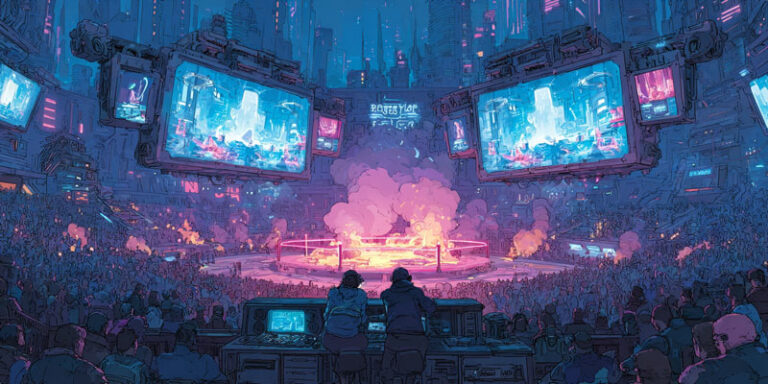
A prompt battle is essentially a creative contest. Participants are given a theme, task, or challenge — such as “generate a futuristic cityscape” or “write a product pitch in pirate-speak.” Each competitor crafts their best prompt, feeds it into the AI tool of choice, and submits the results for judging. The judges can be the community, a panel of experts, or even the AI itself in some cases.
The format borrows elements from hackathons, improv theater, and meme culture. The “weapon” is not code or design software but the prompt — the carefully chosen words that shape an AI’s response.
Online variants also exist. For example, Prompt Wars pits two “spells” (prompts) head-to-head; the winner is the one most preserved in the model’s output, as noted in the OpenAI community.
Why Prompt Battles Capture Attention
- Creativity on display: They reveal just how flexible and surprising AI can be in the hands of different users.
- Community bonding: Shared laughter, admiration, and critique make the event more than a competition — it’s a collective learning space.
- Low barrier to entry: Anyone with access to an AI model can participate. No coding degree required.
- Instant feedback: Results are visible immediately, and participants quickly see what works and what doesn’t.
Case Study: A Community Prompt Showdown
Consider an online creative group that hosted a “Sci-Fi Pitch Battle.” Members had to write prompts that generated the opening paragraph of a novel about space exploration. One prompt leaned heavily into technical jargon, producing a realistic but dry excerpt. Another asked for the perspective of a homesick astronaut writing in a diary — this one drew far more engagement, with readers praising the emotional hook. The takeaway? Emotion often beats precision when it comes to audience resonance.
Offline, live competitions like UW–Madison’s MadPrompts challenged contestants to create themed marketing visuals (e.g., Babcock ice cream) using text-to-image systems — all under the clock, with judges and an audience.
How to Host a Prompt Battle
If you’re considering running one in your team or community, here’s a simple framework:
- Pick a theme: Narrow the scope (e.g., product ads, poems, visuals, business pitches).
- Set clear rules: Define word count, allowed tools, and judging criteria (creativity, accuracy, humor). For text battles, many organizers adopt prompt-engineering tips like those from the OpenAI Help Center.
- Choose judges: Community votes or a small panel? Each has pros and cons.
- Showcase outputs: Display results side by side for comparison.
- Encourage feedback: The best battles spark discussion, not just winners and losers.
Lessons Learned from Prompt Battles
- Precision matters less than context: A clever twist often outshines a technically flawless prompt.
- Diversity of style: Multiple prompts can achieve equally strong results in very different ways.
- Learning through play: People improve faster when experimentation feels like a game.
- Community is the real prize: The relationships and exchanges created often matter more than the trophy.
Prompt Battle Variations
Communities have experimented with different spins on the format:
- Speed rounds: Participants only get 2 minutes to write their prompt.
- Remix battles: Everyone starts with the same base prompt but must twist it in a unique direction.
- Cross-tool battles: The same prompt is tested across multiple AI tools to see differences in output.
- Team battles: Groups collaborate on strategy, adding a cooperative element.
- Algorithmic arenas: Head-to-head “prompt vs prompt” games like Prompt Wars automate judging rules.
Why They Matter for AI’s Future
Prompt battles highlight an often-overlooked truth: using AI well is less about technical specs and more about human creativity. By turning prompt writing into a shared performance, communities uncover techniques that might otherwise stay hidden. These competitions also build a repository of clever approaches that others can learn from — a living archive of human-AI collaboration. Large online communities dedicated to sharing and rating prompts, such as r/ChatGPTPromptGenius, have grown rapidly, reflecting the demand for this kind of collective learning.
Conclusion
Prompt battles may look like playful contests, but they carry deeper significance. They help communities experiment, learn, and celebrate creativity while pushing the boundaries of what’s possible with AI. If you haven’t tried one yet, gather a few colleagues or friends, set a fun challenge, and see what unfolds. You might be surprised at how much a “game” can teach about serious AI skills.
Want to join more discussions like this? Subscribe to NextMindGen and explore how communities are shaping the future of AI collaboration.