Introduction
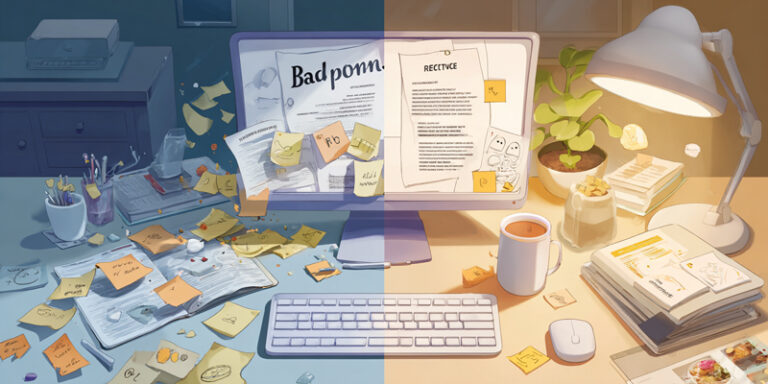
We’ve all written prompts that bombed. Maybe the AI went off-topic, rambled for pages, or delivered something so generic it could’ve come from a fortune cookie. The truth: most “bad” outputs are symptoms of bad inputs. In other words, the prompt failed long before the model responded. But here’s the upside – every failure is a blueprint for a better design. In this article, we’ll dissect five common prompt mistakes, show you real examples of where they go wrong, and then demonstrate fixes that actually work. By the end, you’ll have a toolkit for writing prompts that consistently deliver useful, reliable results.
Why Prompt Mistakes Matter
A sloppy prompt isn’t just an inconvenience. In a business setting, it can waste hours, skew a report, or even misinform a client (Source: Bain & Company). One recent survey found marketers expect generative AI to save about 5 hours per week by automating routine tasks (Source: Salesforce) – time only saved when prompts are clear, not vague. In creative work, it can drain momentum and kill ideas before they’re born. That’s why treating prompt writing as a skill, not just trial and error, is key. Let’s walk through the five most frequent mistakes we’ve seen in practice.
Mistake #1: The Vague Wish
Bad Prompt: “Write about marketing.”
The AI hears this as: “Please guess what I want.” The result is usually a bland, encyclopedic overview. Useful? Barely.
Fix: Add context, audience, and intent.
Improved Prompt: “Write a 500-word blog post for small business owners about low-cost social media marketing tactics, with 3 examples under $100 per month.”
Lesson: Specificity breeds relevance. Tell the model who it’s writing for, why it’s writing, and how to frame it.
Mistake #2: Overstuffed Instructions
Bad Prompt: “Write an article that’s professional but also casual, short but detailed, technical but simple, funny but serious, with bullet points, examples, analogies, statistics, and make it inspiring.”
The model gets stuck trying to reconcile contradictions. The result is incoherent and uneven.
Fix: Prioritize two or three core traits, not ten.
Improved Prompt: “Write an engaging 800-word blog post for junior developers on how APIs work, using analogies and 2 concrete examples.”
Lesson: Clarity beats kitchen-sink thinking. Decide what matters most and drop the rest.
Mistake #3: Forgetting the Format
Bad Prompt: “Explain blockchain.”
The AI might output an essay, a glossary, or even a technical deep dive. But if your use case needs a LinkedIn post, you’ll be stuck reformatting.
Fix: Specify the shape of the output.
Improved Prompt: “Write a LinkedIn post (150 words) explaining blockchain in plain English for professionals outside tech, ending with a relatable analogy.”
Lesson: Always tell the model what container the answer should fit into: email, listicle, case study, or an X post (formerly Twitter).
Mistake #4: No Negative Guardrails
Bad Prompt: “Write a short story about a startup founder.”
You might get clichés: garage office, hoodie-wearing genius, investor pitch drama. Without guidance, the model defaults to tropes.
Fix: Add “avoid” clauses to steer clear of noise.
Improved Prompt: “Write a 1,000-word short story about a startup founder in Nairobi building an agriculture-tech app. Avoid Silicon Valley clichés and focus on local challenges and culture.”
Lesson: Guardrails are as important as instructions. Tell the model what not to do.
Mistake #5: One-Shot Thinking
Bad Prompt: “Summarize this report.”
The AI may dump an unstructured wall of text. That’s because you only asked once.
Fix: Use iterative prompting – ask, refine, then expand.
Improved Workflow:
- “Summarize this report in 3 bullet points.”
- “Now expand each point into a 100-word explanation.”
- “Format the result as a client-facing email.”
Lesson: Iteration beats expectation. Instead of demanding a perfect answer in one shot, break it into steps.
Mini Case Study: The Real Estate Prompt
A real estate agent asked: “Write property descriptions.” The results were generic – “spacious, modern, cozy.” After a quick prompt tweak, it became: “Write a 200-word property description for a downtown Chicago condo, highlighting walkability, skyline views, and proximity to public transit.” The new version popped off the page. Why? Because the prompt forced details that buyers care about. That’s the heart of the fix mindset: add context, cut clutter, name the outcome.
Conclusion
Prompting is less about “magic words” and more about clear communication. Every failed attempt is a signal. Was it vague? Overstuffed? Missing format or guardrails? The fix is usually simple once you see the pattern. If you treat prompt design as a craft, not a gamble, the AI becomes a lot more predictable – and far more valuable.
Next step: Try rewriting one of your own failed prompts using the five fixes above. And if you’d like more practical recipes, check out our Prompt Recipe Card Set – free download.